Some dude bro on the internet talking about the new She-Ra reboot: Ugh SJWs are taking over cartoons and making them all preachy. I hate it when shows try to push an agenda on kids. Why can’t they be like they used to be, you know?
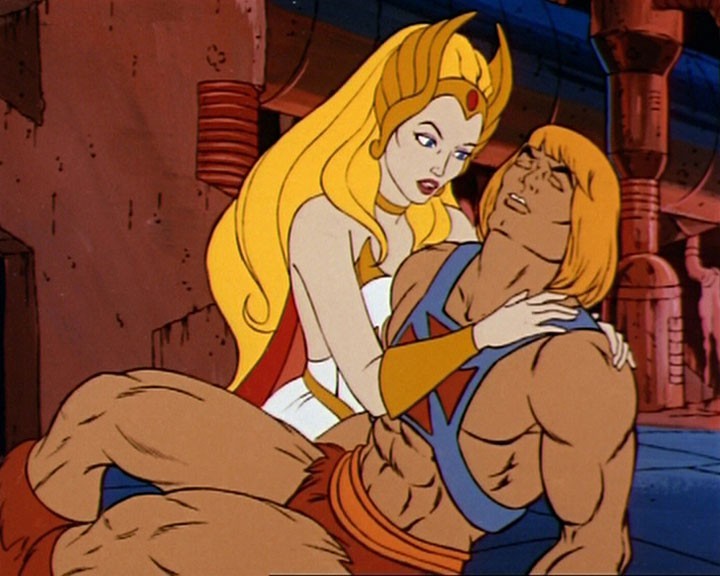
Original He-Man, looking straight at the audience: We had a lot of fun here today, but you know what isn’t fun? Judging others based on how they look. Not liking a person because he or she is a different race or religion is wrong. Also, plant a tree, and don’t do drugs.
Lou Scheimer was born to a German Jewish family and believed that his cartoons had a responsibility to teach children kindness and respect for everybody.
Back then there were also MILITANT divides between “boy’s” and “girl’s” entertainment but when he found out He-Man had at least a small following of little girls he pitched the concept of He-Man’s sister She-Ra and was insistent she be as tough a warrior as her brother. He saw that girls actually did like “scary” sword and sorcery and had a WHOLE NEW FUCKING SHOW made so they could feel acknowledged and have a heroine to look up to with her very own series.
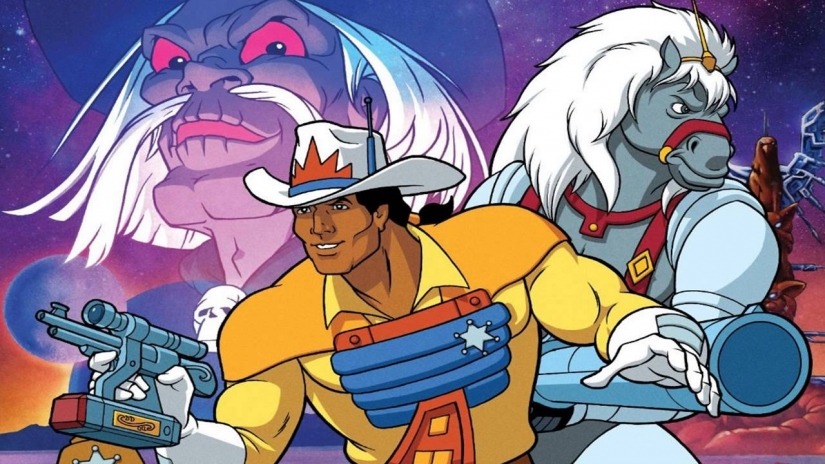
Later he would help design a whole new sci-fi fantasy setting with the most creative control he ever had, Bravestarr, and was adamant that the hero be a Native American man, the first ever in a starring role on a kid’s action show. He also wanted Bravestarr to be a positive role model by being a patient, gentle, soft spoken man who abhors violence and avoids using guns at all costs.
These cartoons are remembered as schlocky toy commercials and they ARE entertaining that way but real love went into them by a really wonderful guy who sincerely hoped he’d make his fans at least a little more sensitive even as he reeled them in with barbarians and robots.
It’s really bizarre to me whanever neurotypical people start talking like this because this is just what experiencing time is like when you have ADHD. My whole life feels like this and 2018 is no different.
To be totally fair to Willy Wonka, at least a couple of those candy factory casualties involved kids deliberately circumventing reasonable safeguards, sometimes aided and abetted by the parents who were supposed to be supervising them. What happened is at most 60% his fault.
Asexual stories need to be told, so when BBC3 got in touch and told me that they wanted to cover the UK Asexuality Conference 2018 as part of a documentary on asexuality, I was excited to say the least. I would be speaking on two panels at the conference, providing some representation for Black aromantic asexual women. After coming out publicly as asexual last year, I have tried to use the platform I gained through fashion modelling to raise awareness for asexuality, so this opportunity was a perfect fit.
BBC3 were there from start to finish, filming the diverse display of asexual people I’ve ever seen. There were people from all walks of life – there were married asexuals, asexuals with children, transgender asexuals, Muslim asexuals, asexual people with disabilities, polyamorous asexuals, homoromantic asexuals, aromantic asexuals, teenage asexuals, and older asexuals. You name it, they were welcome and included.
We were filmed as we told our stories, such a powerful array of stories – some rocky, some smooth, but all equally empowering. BBC3 took a group of us aside for an in-depth group interview. The group was predominantly young and white, but it represented different types of asexuality and asexual experiences. But I soon realised that BBC weren’t interested in diverse experiences… They wanted the ‘lonely asexual’ trope.
When we sounded too positive, they were quick to put us in our place. They turned away from those of us who were happily aromantic, or happily in relationships, and drilled the singles for details about how it felt to be an unloved asexual who couldn’t find a partner. It seemed to displease them that some of us had even – god forbid – had sex and not hated every second of it. Quickly, they turned away from a guy who fit that category, rotated the camera to me, and asked, “If you had to have sex, how would that feel?”
“I wouldn’t have sex,” I answered.
“But if you had to, how would it feel?”
How would it feel if I was forced to have sex? Would a hypothetical rape make an aromantic asexual more interesting?
From then on, I sensed that BBC3 had an angle that they were sticking to, but I couldn’t have anticipated the patronising, whitewashed, exclusionary mess that they aired. They intelligently called the documentary, ‘I Don’t Want Sex,’ but what we actually got was, ‘The Undateables: Asexual Edition,’ and I was horrified.
I cringed as the cameras zoomed in on the presence of stuffed toys and action figures in one of the participant’s bedrooms, as if attempting to make her seem child-like. However, that was nothing in comparison to how I felt as an asexual guy was guided into a sex shop to test his levels of discomfort (which was obvious), or as they quizzed a girl on masturbation and vibrators in a room conveniently decorated with sexual images. I rolled my eyes as one of the participants eased an asexual guy through the art of texting a potential romantic interest, like teaching a child to read, and how an asexual girl not speaking to guys in a bar was treated as a cause for concern.
Asexuality is not synonymous with innocence and a lack of social skills, but it seemed like BBC3 didn’t want the public to know that. They also missed the detail that asking asexual people about what they do with their genitals is as inappropriate and invasive as asking as transgender woman whether she still has a penis. It’s an obvious, needless attempt to try and gauge how seriously someone should take another’s asexuality.
I was running out of hope by the time the conference was included in the last five minutes of the show, but I was curious to see what BBC3 had deemed important enough to show. Out of the hours and hours of footage they had of me, they decided to show me wiping my eyes, as if crying at the brief and uninspiring conversation about asexual clothing choices that they decided to air. Only, they knew that I had eyeliner in my eye. We had laughed about it on the day, they had supposedly paused the filming while I had been given a tissue to solve the problem. If I needed any more reason to suspect that the portrayal of asexual happiness was too much to ask for, that was it.
The closing statements of the documentary added insult to injury. “Cute asexuals do exist.” That’s the message that was taken from the conference? When we sat together for over an hour and opened up to BBC3’s cameras like it was some kind of group therapy meeting, I didn’t realise that we were being observed to see which was us were ‘cute’ enough to date. Well, the boys were, at least. It was time to add the old ‘asexual people aren’t good looking’ stereotype to the growing list featured in this documentary.
I am not just upset because BBC3 took an empowering, celebratory experience like the UK Asexuality Conference and tried to turn it into dating show. What bothers me the most about this documentary is the narrow, stereotypical portrayal of asexual people and asexuality – and just in time for Asexual Awareness Week. I know that BBC3 had the opportunity to do better, but they decided not to, even though this documentary could be the first and only time that people see real asexual people on a mainstream platform.
Asexual people aren’t just shy, white, young people who are sad because they can’t get dates. Despite BBC3’s desperate attempts to exclude us, aromantic asexual people exist, asexual people in happy relationships exist, asexual families exist, asexual minorities exist. Asexuality isn’t a new thing that only young people are doing. And asexual people are perfectly capable of living fulfilling, happy, complete lives, whether they date and have sex or not.




 aceofsquiddles